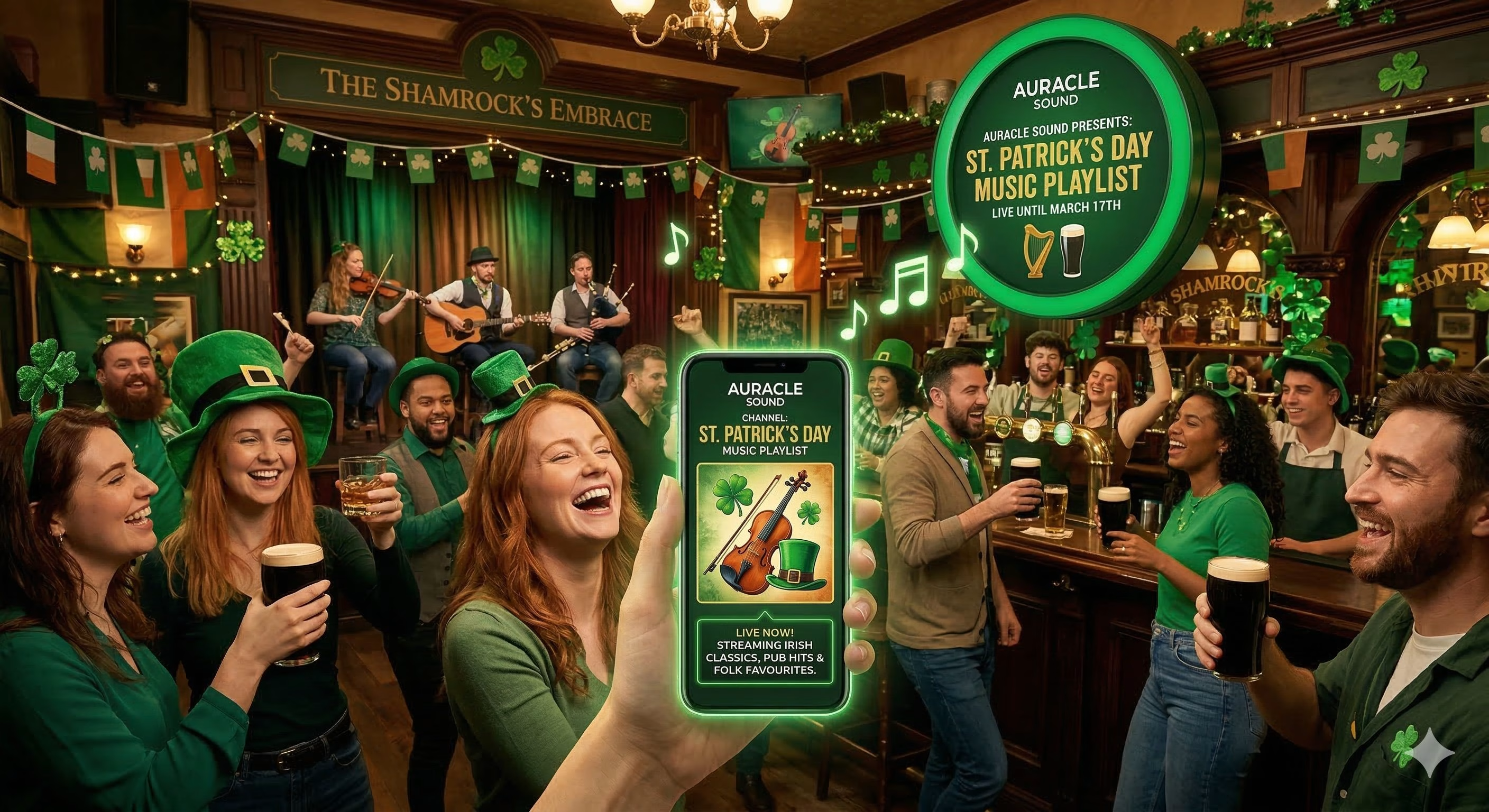
Calling all pubs, clubs, and bars! The most wonderful time of the year (for us, at least!) is almost here. St. Patrick’s Day is a celebration of all things Irish, and what’s a celebration without music?
We’ve curated a special playlist featuring classic Irish pub tunes, high-energy folk favorites, and modern hits with an Irish twist. It’s the perfect soundtrack to get your customers in the mood for a fun-filled day.
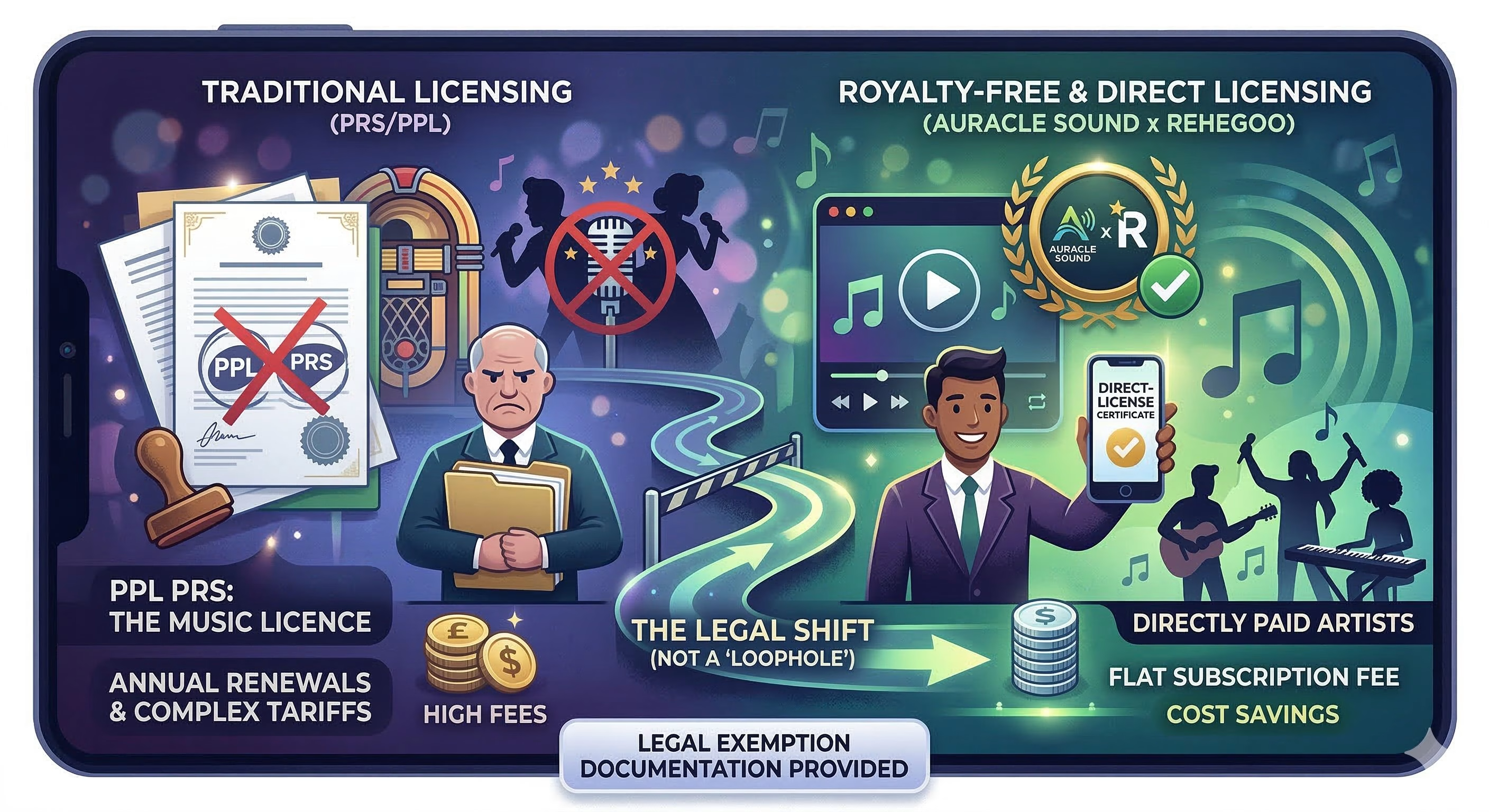
It’s a common misconception in the business world that there is a “loophole” to escape music licensing entirely. While switching to a royalty-free provider like Auracle Sound or Rehegoo is a legitimate business strategy, it isn’t a “bypass” in the sense of breaking the rules—it’s actually about choosing a different legal framework for your background music.
Here is a breakdown of how this transition works, the benefits, and the legal realities of managing music licenses for your business.
Understanding the “PRS Loophole”: Is it Real?
In the UK, most businesses playing music are legally required to hold a TheMusicLicence from PPL PRS. This covers the vast majority of commercial music you hear on the radio or streaming charts.
The “loophole” people refer to is simply Royalty-Free Music (RFM) or Direct-Licensed Music. By using a service that owns 100% of the rights to its catalog, you bypass the need for a PPL PRS license because the artists on those platforms have opted out of the traditional collection society system.
How the Switch Works
Direct Licensing: Platforms like Auracle Sound and Rehegoo curate libraries where the performance rights are managed directly by the provider, not by PRS for Music or PPL.
Verification: Once you subscribe, the provider issues a certificate. This is your proof of “Music License Exemption” should a PRS representative visit your premises.
Cost Savings: Because these services don’t pay into the massive overhead of global collection societies, the subscriptions are often significantly cheaper than a standard PPL PRS license.
Comparing the Two Models
Feature
PPL PRS (TheMusicLicence)
Royalty-Free (Auracle/Rehegoo)
Content
Top 40, Chart hits, Famous Classics
Independent artists, Bespoke moods
Legality
Required for all “Public Performance”
Exempt if catalog is 100% direct-licensed
Cost
Variable (based on floor space/staff)
Flat monthly/annual subscription
Administration
Annual reporting and renewals
Simple “Plug and Play”
Why Choose Auracle Sound x Rehegoo?
If you are looking to move away from traditional licensing, this partnership offers a specific set of advantages for business owners:
Curated Playlists: Unlike a basic library of “elevator music,” these services focus on high-quality, contemporary tracks that fit specific brand vibes (e.g., “Chill Lounge,” “High-Energy Retail”).
No Hidden Fees: You pay the subscription to the provider, and that is it. There are no additional “per square meter” fees that often catch businesses off guard with PRS.
Legal Indemnity: They provide the necessary documentation to show that all mechanical and performance rights are covered, protecting you from copyright infringement claims.
The Catch: What You Need to Know
Before you cancel your PPL PRS license, there are a few critical things to consider:
Zero Tolerance: If you play even one song from the radio, a TV in the corner, or a personal Spotify account that is covered by PRS, you are liable for the full license. To “bypass” the license, you must ensure your business is a 100% royalty-free zone.
Public Perception: If your brand identity relies on customers hearing “The Beatles” or “Taylor Swift,” a royalty-free service might not be the right fit. However, for spas, cafes, and many retail shops, the atmosphere is more important than the specific artist name.
How to Make the Transition
Audit your sound system: Ensure no radios or TVs are broadcasting PRS-controlled content.
Sign up for a Direct-Licensed service: Choose a provider like Auracle Sound or Rehegoo.
Obtain your Certificate: Keep your exemption certificate on-site.
Notify PPL PRS: Inform them that you are now playing exclusively direct-licensed music and wish to cancel your license. They may ask for proof of your new service.
How Much Does a Music License Cost in the UK?
Music licence costs in the UK depend on your business type and music usage. Fees are calculated from factors like audible floor area, number of employees, and customer capacity.
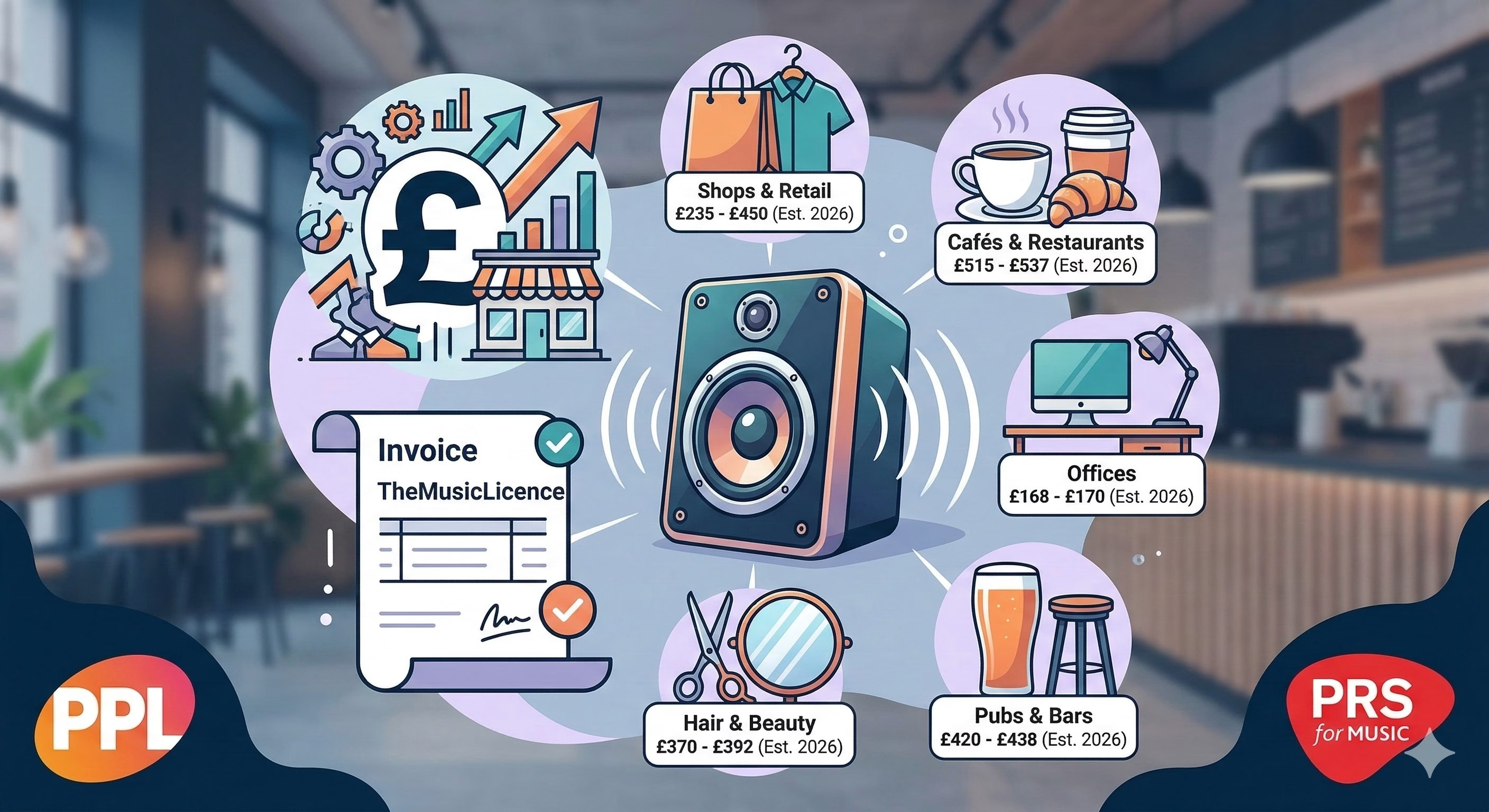
Annual costs start at around £168 for a small office and can exceed £515 for cafés and restaurants. Rates are higher for larger businesses or those hosting live events. For example, small shops may pay £235 to £450 per year, while pubs and bars using background music may pay from £420 annually.
Most businesses that play music for customers or staff need The Music Licence, which covers payments to PRS for Music and PPL to guarantee fair compensation for songwriters, publishers, performers, and record labels. Since pricing varies by sector and usage, review the tariff that applies to your business type to estimate your licence cost.
Music License
Who Needs a Music Licence?
Any business that plays music in a commercial environment where customers or staff can hear it will likely need a music licence. This includes businesses using music to create atmosphere, encourage customers to stay, or improve staff morale.
Based on the This applies to a wide range of settings, including shops, offices, cafés, restaurants, hair and beauty businesses, pubs, and bars. It also goes beyond playlists and speakers in customer-facing areas. For example, if music is played through a business sound system, used as background music, or played to callers on hold, a licence may be required.nt is that music used in a business is different from music played for private, personal enjoyment at home. If it forms part of your commercial environment in any audible way, it is important to check whether TheMusicLicence is needed.
Do You Need a Licence for Live or Recorded Music?
Yes, businesses may need a music licence whether playing recorded music as part of daily operations or using music for live entertainment. Background playlists in commercial spaces require proper licensing, and live events may bring additional requirements.arts with recorded music played through speakers in customer or staff areas. But the need for licensing can go further if you host DJs, karaoke nights, or live bands, as these uses are treated differently from simple background music and may require extra permissions on top of your standard licence.
As a result, the cost and type of licence depend on how music is used in your business. A shop or office playing background music is not treated the same as a venue hosting live performances or music-led events.
What Does TheMusicLicence Cover?
TheMusicLicence covers the legal right to play music within a business or commercial setting where it can be heard by customers, visitors, or staff. As the current article explains, it brings together payments for both PRS for Music and PPL, so that songwriters, publishers, performers, and record labels are fairly compensated when their music is used.
This includes background music played within your business premises to shape atmosphere, improve customer experience, or boost staff morale. It applies to commercial environments, not private listening at home.
The current article also makes clear that licensing can extend past standard in-store or on-site playback. For example, if you use music on hold for phone lines, there is a specific telecommunications tariff that may apply. It also notes that a personal streaming subscription such as Spotify, Apple Music, or Amazon Music does not cover business use, which is why businesses need both the Music Licence and a suitable commercial streaming provider.
If you would like, I can write the next section, ‘How Music Licence Costs Are Calculated,’ with the same style.
How Music Licence Costs Are Calculated
Music licence costs are not a single flat fee. PPL PRS applies specific tariffs customized to each industry, with pricing based on how music is used in your business.
Some of the main factors include audible floor space, the number of employees, and customer capacity. In other words, the amount of space where music can be heard, how many people are working in the business, and how many customers or guests you serve can all affect the final licence cost.
The type of business also matters. A small office, a retail shop, a café, and a pub will not necessarily be charged in the same way, because each falls under a different tariff structure. The article’s examples show that costs vary depending on sector, which is why businesses are usually assessed according to the category they operate in.
Another important factor is how the music is used. Background music in a standard commercial setting may be priced differently from music that plays a more central role in the business experience. The article also notes that businesses hosting live performances, DJs, karaoke, or similar events may need additional permissions on top of their standard background music licence, which can increase the overall cost.
So while the exact fee depends on the relevant tariff, the general rule is that music licence cost is determined by your audible area, business size, customer or staff numbers, business type, and whether you use music simply as background audio or as part of live entertainment or events.
Licence Music Cost by Business Type
Music licence cost varies by business type because different sectors are assessed under different tariffs. As the current article explains, PPL PRS uses tariffs customized to your industry, so there is no universal flat fee for every business.
Sector
Metric
Est. Annual Cost (+VAT)
Retail & Shops
Small shop (up to 50m²)
£235 – £450
Offices
Up to 4 staff members
£168 – £170
Cafés & Restaurants
Up to 30 seats
£515 – £537
Hair & Beauty
Up to 10 treatment chairs
£370 – £392
Pubs & Bars
Background music (under 400m²)
£420 – £438
Here are the business examples covered in the current article:
Shops
For retail and shops, estimated annual costs range from £235 to £450 + VAT for a small shop up to 50m².
Offices
For offices, the article gives an estimated annual cost of £168 to £170 + VAT for premises with up to 4 staff members.
Cafés and Restaurants
For cafés and restaurants, estimated annual costs range from £515 to £537 + VAT for venues with up to 30 seats.
Hairdressers and Beauty Salons
For hair and beauty businesses, the article lists estimated annual costs of £370 to £392 + VAT for businesses with up to 10 treatment chairs.
Pubs and Bars
For pubs and bars using background music in premises under 400m², the article gives an estimated annual cost of £420 to £438 + VAT.
Live Performances or One-Off Events
Costs increase when music is more than background use. Hosting live performances, DJs, karaoke nights, or similar events may require additional permits beyond the standard music licence. Venues running music-led events or one-off entertainment should expect higher overall costs than those playing only background music.
Other Business Types
While the current article does not give pricing examples for hotels, guesthouses, nightclubs, sports grounds, members clubs, churches, health facilities, bingo halls, bowling alleys, cinemas, or casinos, the same principle applies: the final licence cost depends on the tariff for that sector and how music is used within the space.
Since pricing is dependent on factors including audible floor space, staff numbers, customer capacity, and the role of music in your business, the most accurate cost depends on your business category.
What Is PPL PRS and Why Do Businesses Pay Both?
PPL PRS is the joint licensing system behind The Music Licence, which most UK businesses use when they want to play music legally in a commercial setting. As the current article explains, this brings together the two main collection societies into one route, making music licensing simpler for business users.
Businesses pay both because different people involved in a song are paid through different organisations. PRS for Music collects royalties for songwriters and publishers, while PPL collects royalties for record labels and performers. In other words, one side covers the rights in the composition, and the other covers the rights in the recording.
By obtaining The Music Licence, a business covers both rights at once rather than dealing with them separately. This is the standard route for most businesses that play music for customers, visitors, or staff, guaranteeing everyone involved in creating and recording music is fairly compensated.
Do I Need a Licence to Play Recorded Music in My Business?
Yes, in most cases, if you play recorded music in your business, you will need a music licence. The current article explains that when music is used in a commercial environment rather than for private listening at home, it usually requires The Licence.
This applies whether you play music for customers, visitors, or staff as part of your business environment. Background playlists used to shape atmosphere, improve customer experience, or boost staff morale are considered business use. Even if music is only playing in the background, you may still need the correct licence.
A personal subscription to services like Spotify, Apple Music, or Amazon Music is not sufficient for commercial use. These platforms are for private listening, so businesses need both the appropriate licence and a suitable commercial music provider.
In simple terms, if your business uses music in a way that others can hear it, you should assume that legal permission is required and check whether The Licence applies.
Can I Play Spotify, Radio, TV, or YouTube in a Business?
Not automatically. The current article makes clear that using music in a commercial setting is different from private listening at home, which means businesses need the right legal permission before they play music for customers, visitors, or staff.
A personal subscription to Spotify, Apple Music, or Amazon Music does not cover business use. These services are for private, non-commercial listening and are not sufficient for commercial music in your business. To stay compliant, businesses need The Music Licence and a suitable commercial streaming provider. Auracle Sound offers commercially licensed music streaming and reliable players for UK businesses, with professionally curated channels designed for public performance.
While the article does not go into separate detail on radio, TV, music channels, or YouTube specifically, the same principle applies throughout: if music is being used in a business environment rather than a private home setting, it falls under different rules and may require the correct licence. The purpose of The Music Licence is to make sure the relevant creators and rights holders are paid when music is used commercially.
If you want to play music through streaming providers or other media in your business, do not assume a personal account or ordinary access gives you the right under UK copyright laws.
What About Royalty Free Music?
The current article does not go into detail about royalty free music, but it does make an important distinction between personal listening and music used in a commercial environment. It also explains that businesses need the correct licence and a suitable commercial music provider when using music in their premises.
In practical terms, royalty free music may reduce some of the complexity around music licensing because it is often supplied under a licence that already allows certain types of commercial use. However, that does not mean every track labelled royalty free can automatically be used in every business setting without checks.
The key issue is the exactThe key issue is the specific commercial terms attached to the music. Businesses must confirm whether the track or service allows use in customer-facing environments, as background music, or across multiple locations. Some royalty free licences are broad, while others may restrict business use.usic can sometimes be a simpler option, businesses should always check the provider’s licence terms carefully before they play royalty free music in a commercial setting.
Looking for a PRS/PPL-Free Alternative?
If you want background music for your business without the ongoing PRS/PPL fees, Auracle Sound also offers a non-copyright option through Auracle Sound X Rehegoo Royalty Free Music.
Through this service, businesses can access fully licensed royalty free music designed for public performance in the UK and beyond. Rehegoo’s content is available on Auracle’s reliable IP audio receivers, giving businesses a practical alternative to traditional commercial music licensing.
Because the content is fully licensed for public performance, businesses using this service can avoid standard PRS/PPL fees in the UK while still creating a professional in-store atmosphere. The system works as a store-and-forward service, with licence-free content stored on the receiver’s internal solid state drive and scheduled for day-parted playback throughout the day.
For multi-site businesses, any location with a network connection can also be remotely monitored and updated out of hours, making it a flexible option for brands that want simple, managed background music across one or more venues.
To find out more about Royalty Free Music via Auracle Sound in the UK, ROI, and the EU, get in touch:
You can also explore more from Auracle Sound, including Music Streaming, Players, Sectors, Case Studies, and Contact options.
What Happens If You Play Copyrighted Music Without a Licence?
If you play copyrighted music in If you play copyrighted music in your business without the proper licence, you could face extra costs and compliance issues. If PPL PRS discovers unlicensed music use, they may apply a 50% surcharge on the first year’s fee.ight legal permission in place can increase your overall licence cost, rather than saving money. Instead of simply paying the standard fee, a business may end up paying more once unlicensed music use is identified.
The article’s message is clear: getting TheMusicLicence in place early helps businesses stay on the right side of the rules and avoids unnecessary extra fees. In that sense, the licence does more than just allow music use — it also guarantees adherence by covering the rights of songwriters, publishers, performers, and record labels when music is played in a commercial environment.
So while the current article does not go in detailed examples of legalWhile the article does not provide detailed legal examples, it makes clear that businesses should be proactive, not reactive, about music licensing.sses can use the PPL PRS website, where TheMusicLicence is available for organisations that use, play, or perform music in a commercial setting. The official site also explains that the cost will vary depending on your business type, size, and day-to-day music use.
The right licence depends on the tariff for your business. Commence by reviewing the relevant music tariffs for your sector, as PPL PRS groups pricing by venue type and music usage. The official tariffs section lists categories for different businesses and notes that pricing can vary, so some businesses may need to request a direct quote.
In practical terms, that means businesses should first identify how they use music — for example, background music, music on hold, or live entertainment — and then check the sector or tariff that best matches their premises. The official guidance says that, in most cases, both a PPL and PRS for Music tariff will apply through TheMusicLicence, which is why checking the correct category is so important before applying.
Once you know your business category and music usage, use the PPL PRS site to determine which licence is most relevant to your setup.
Music Tariffs Explained
Music tariffs are the pricing categories used to work out your music licence cost. Rather than charging every business the same flat fee, TheMusicLicence uses different tariffs based on the type of venue and the way music is used in that business.
In most cases, a business’s licence cost is built from both a PPL tariff and a PRS for Music tariff. PPL PRS explains that tariffs are set separately by PPL and PRS for Music, and the ones that apply to your business determine how your final cost is calculated.
Tariffs vary by sector and music usage. Official categories include workplaces, hair and beauty salons, pubs, bars, restaurants, cafés, hotels, sports venues, members clubs, telephone music on hold, and specially featured entertainment. Music licence cost changes depending on business type, size, and whether music is used as background audio or as a central feature.
So, in simple terms, music tariffs are the rules and rate structures that decide what your business pays for TheMusicLicence.
FAQs About Music Licensing
Do I need both a PPL licence and a PRS licence?
In many cases, yes. The current article explains that TheMusicLicence brings together payments for PPL and PRS for Music in one route. This matters because different parts of a song are protected in different ways. PRS for Music, sometimes associated with the wider role of a performing rights society, covers songwriters and music publishers, while PPL, linked to Phonographic Performance Ltd and phonographic performance rights, covers performers and recording rightsholders.
Why do businesses need a music licence at all?
A music licence gives a business the legal permission to use music in a commercial settingA music licence gives a business legal permission to use music in a commercial setting. Whether licensing music for background use or entertainment, the licence ensures artists, musicians, publishers, performers, and labels are fairly paid. In simple terms, it secures compliance when music is played outside private home use.u play music in cafes pubs, guesthouses restaurants, or theatres hotels, you may need the appropriate licence if customers or staff can hear it. The same general principle applies across many sectors where music is part of the environment.
Do beauty salons, cinemas, factories, and hairdressers need one too?
They often can. The article already shows pricing examples for hair and beauty businesses, and the same logic can extend across commercial spaces such as beauty salons cinemas and factories hairdressers where music is played for staff or customers.
Do casinos, social clubs, sporting facilities, and public venues need a licence?
Potentially, yes. Businesses and venPotentially, yes. Businesses and venues such as casinos, social clubs, sporting facilities, community halls, public transport environments, and other public-facing settings may need a licence if music is used in a commercial or shared space.treaming services, or other equipment?
Personal subscriptions do not cover business use. If music is played through speakers, screens, or other digital devices, you must check whether your usage is properly licensed for a commercial setting.
Do I need extra permission to stage live music events?
Possibly. Businesses that stage live music events, host DJs, or run karaoke nights may need additional permissions past standard background music cover. If your business wants to play live music or host performances, your costs and licensing needs may increase.
Does a licence cover live performers as well as recorded music?
Standard background music cover is one thing, but live or recorded music can involve different requirements. If your venue hosts performers, bands, or entertainment nights, extra permissions may be needed beyond the usual licence.
Why does music licensing matter on such a large scale?
Because music licensingMusic licensing supports a large creative ecosystem. Licence fees help compensate writers, publishers, performers, and labels. Across the industry, this supports hundreds of thousands of creative contributors and businesses connected to music use.way to think about music licensing?
A simple way to view itSimply put, if your business plays music in a commercial environment, you likely need permission. The licence ensures publishers, performers, labels, and recording owners are paid fairly when their work is used.so turn this into a more SEO-styled FAQ with shorter answer lengths for featured snippet targeting.
If you’re running a business, you already know that the right playlist can transform your atmosphere, keep customers browsing longer, and boost staff morale. But before you hit “play,” there’s a crucial legal step: securing TheMusicLicence.
At Auracle Sound, we help businesses curate the perfect soundscape while staying compliant. To help you budget for the year ahead, we’ve broken down what you can expect to pay for music licensing in the UK.
🔒 Lock Down Your Sound: Why Auracle’s Hardware is the Ultimate Tamper-Proof Solution for Brand Consistency
In the competitive world of retail, hospitality, and leisure, brand consistency is non-negotiable. Every touchpoint—from the lighting and scent to the service and décor—must align perfectly. Yet, one of the most common and damaging breaches of brand identity occurs right on the shop floor: staff tampering with the music.
We understand the frustration. You invest time and money into curating the perfect playlist only to find a bored employee has plugged in their phone, skipped tracks, or switched the channel to their personal favourite. The result? Instant brand damage, legal risk, and a disrupted customer experience.
The solution isn’t just a policy; it’s a piece of hardware designed to enforce your vision: The Auracle Sound Receiver Unit.
🚫 Hands Off the Playlist: Enforcing Your Brand Sound
While staff are the heart of your operation, the music system is not their personal jukebox. Letting them interfere with the music leads to:
Brand Dissonance: A luxury gym needs motivating, contemporary tracks, not a staff member’s cheesy 90s throwback playlist.
Customer Confusion: The atmosphere changes daily, creating a jarring experience for loyal customers who expect a specific environment.
Legal Jeopardy: Allowing personal device streaming (like Spotify or Apple Music) for commercial use violates licensing terms, exposing your business to PPL/PRS scrutiny.
The Auracle Solution: Security Built into the Hardware
The fundamental difference between Auracle Sound and a consumer streaming service is that our system is built for commercial integrity and centralized control. Our dedicated, branded hardware unit is your ultimate defence against unauthorised music changes.
1. The Physical Lock-Down
The Auracle Receiver Unit is a dedicated piece of equipment designed only to play your commercially licensed Auracle Sound channels. It is not a glorified tablet or a standard media player.
No General Access: Staff cannot log out, download other apps, or access a browser to stream illegal content. The unit is locked into the Auracle platform.
Tamper-Proof Design: The physical unit can be secured in a back office or behind the counter, often with limited physical controls (like a master volume knob), which are less susceptible to arbitrary changes than a touchscreen interface.
2. Centralised Scheduling Override
As the business owner or HQ manager, you have complete control over what music plays and when, across your entire estate.
Remote Channel Lock: You can schedule the music for every hour of the day (e.g., Mellow Pop 9am-12pm, Uptempo Retail Mix 12pm-5pm, Chilled Evening Lounge 5pm-Close). Once the schedule is set from your remote dashboard, the local receiver unit is locked into that schedule.
No Skipping Allowed: Unlike consumer services, the Auracle player prevents track skipping. This ensures the integrity of the professionally curated mix and prevents employees from fast-forwarding through songs they dislike.
3. Consistency Across the Estate
Whether you have three coffee shops or thirty retail outlets, every single unit plays the exact same, correct music at the same scheduled time.
True Brand Alignment: This enforced consistency guarantees that the desired sonic experience—the core of your brand’s atmosphere—is delivered without deviation in every single location, every single day.
Reduced Training: You don’t need extensive training on music policy. The hardware enforces the policy automatically, reducing the risk of human error or deliberate interference.
Stop Wishing. Start Enforcing.
If you are tired of walking into your venues and hearing a sonic experience that doesn’t match your brand, it’s time to stop relying on policy and start relying on technology.
The Auracle Sound Receiver Unit ensures that your investment in legal, high-quality, and branded background music is protected and delivered flawlessly across your entire estate.
Ready to lock down your brand sound? Contact us today to learn more about the Auracle Sound hardware and how it guarantees consistency across all your outlets.
🎄 Turn Down the Tension: Introducing Our Fantastic New Christmas Mellow Pop Channel
The festive season is officially here! If you run a business—be it a boutique, a café, a gym, or an office—you know that the right music is essential for setting the perfect atmosphere.
But let’s be honest: by mid-December, even the most devoted Christmas fan can start to feel the holiday music burnout. The volume is high, the tempo is fast, and the non-stop repetition of certain classics can send both staff and customers over the edge.
That’s why we’ve launched the antidote to festive stress: the Auracle Sound Christmas Mellow Pop channel!
The Power of the Mellow Moment
You want to evoke the feeling of cosiness, warmth, and nostalgia—not frantic last-minute shopping. Our new channel is specifically curated to capture the relaxed, contemporary side of Christmas, blending the festive spirit with smooth, modern sounds.
What is Christmas Mellow Pop?
Think of it as the ultimate comfort blanket for your ears. Our Mellow Pop channel takes the best of modern artists and chilled-out tracks, giving them a subtle Christmas twist. This channel features:
Laidback Modern Hits: Contemporary pop artists performing their softest, most relaxed tracks.
Contemporary Classics: Familiar Christmas songs reinterpreted with gentle rhythms and mellow arrangements.
Ambient Warmth: The perfect blend of vocals and instrumental depth to create an atmosphere that encourages lingering and browsing, not rushing.
This channel is designed to be the soundtrack to a peaceful, enjoyable holiday experience in your venue.
🌟 The Benefit: Research shows that when music is enjoyable, shoppers spend more time in-store and evaluate products more favourably. By avoiding overly loud or repetitive tracks, you keep the festive cheer high and employee fatigue low.
Why Mellow Pop is Your Secret Weapon This Christmas
Reduce Staff Fatigue: Your team will be listening to this music for hours every day. Providing them with a sophisticated, varied, and genuinely enjoyable playlist helps boost morale and prevents the “earworm exhaustion” that comes with traditional holiday playlists.
Encourage Dwell Time: Slower, more relaxed tempos encourage customers to slow down, browse longer, and ultimately spend more. In the rush of the season, a calming atmosphere is a huge differentiator.
Maintain Brand Sophistication: If your brand identity is chic, modern, or upscale, blaring traditional carols can feel jarring. Our Mellow Pop channel offers a festive vibe that aligns perfectly with a more refined and contemporary aesthetic.
Legally Covered Music: As with all Auracle Sound channels, our Christmas Mellow Pop channel is commercially licensed for business use, ensuring you can play it with full peace of mind.
🎁 Unwrap Your Free Gift: Try Christmas Mellow Pop for 7 Days!
We are so confident that Christmas Mellow Pop will transform the atmosphere in your business that we are giving you a free pass to experience it yourself.
Start your 7-day, no-obligation trial right now and get instant access to our full library of expertly curated channels, including the new Christmas Mellow Pop.
Don’t let your business fall victim to the stressful side of seasonal music. Switch to Auracle Sound’s Christmas Mellow Pop and create the relaxed, stylish, and festive atmosphere that customers and staff will love.
Ready to try the new channel and set the perfect mood for the holidays?
🎶 Beat the Price Hike: Why Royalty-Free Music is the Smart Choice for UK Businesses
The soundtrack to your business – whether it’s the gentle background music in a café, the upbeat tunes in a shop, or the hold music on your phone system – music is a powerful tool for customer experience and staff morale.
However, for many UK businesses, the annual cost of legally playing copyrighted music is set to rise. With PRS and PPL continuing to adjust their tariffs for inflation and reviewing their structures, many companies face increasing costs for what is known as ‘TheMusicLicence’.
The good news? There is a savvy, budget-friendly alternative that offers peace of mind and great music: Royalty-Free Music.
Here’s why UK businesses should make the switch right now, before the next wave of price increases hits.
What is ‘TheMusicLicence’ and Why is it Getting Costly?
In the UK, if you play commercial music (the kind you hear on the radio or from major artists), you typically need TheMusicLicence, which covers two separate rights organisations:
PRS (Performing Right Society): Collects royalties for the songwriters, composers, and publishers of the musical composition.
PPL (Phonographic Performance Limited): Collects royalties for the performers and record labels who own the specific sound recording.
These organisations distribute fees to their members. The cost of your licence is not fixed; it is calculated based on factors like your business type, the size of your premises, how many staff you have, and how music is used (e.g., background vs. featured entertainment).
The Inflation Impact
Both PPL and PRS for Music regularly adjust their fees, often linked to the Retail Price Index (RPI), which means that as inflation rises, so do your music licensing costs. Furthermore, changes to specific tariffs—such as PPL’s recent shift to basing fees on actual attendance for ‘Specially Featured Entertainment’ (SFE) events in nightclubs and bars—can lead to higher, less predictable bills for certain sectors.
🎧 The Royalty-Free Advantage: One-Time Cost, Zero Royalties
Royalty-free music is fundamentally different from commercial music.
The term “royalty-free” is key: it means “free of royalty payments” to the collecting societies (PPL/PRS). Once you purchase a licence for a royalty-free track, you pay a single, one-time or subscription fee to the copyright holder (often an independent artist or a music library).
This single payment grants you the right to use the music in your business without any further ongoing royalty payments to PPL or PRS for that specific music.
1. Predictable and Lower Costs
The most immediate benefit is financial predictability.
Fixed Fee: Whether you pay a one-off fee per track or a flat monthly subscription to a royalty-free music provider, your costs are clear and won’t fluctuate based on your shop’s square meterage, the number of employees, or RPI adjustments.
Massive Savings: For a small shop in 2025, a combined PRS/PPL licence might cost hundreds of pounds annually. A dedicated royalty-free music subscription service, by contrast, can be significantly cheaper, potentially offering savings of 50% or more compared to the full Music Licence.
2. Legal Simplicity and Peace of Mind
Navigating the PPL/PRS tariffs can be complex. You must ensure you have the correct licence for your specific business use, which can change if you expand, host events, or alter how you play music.
One Simple Licence: With royalty-free music, your provider handles the rights clearance. You receive a certificate of licence that legally confirms the music is non-PPL/PRS registered, providing a straightforward defence against any compliance checks.
No Reporting Hassle: You are not required to track or report the specific music you play to the collecting societies, simplifying your administrative burden.
3. High-Quality, Curated Soundtracks
A common misconception is that royalty-free music means poor quality. This is no longer the case. The market has matured, and many excellent, professional composers and artists create high-quality tracks for royalty-free libraries.
Perfectly Branded Music: Unlike radio or pre-made playlists, royalty-free services allow you to select music that perfectly aligns with your brand’s atmosphere and target audience, whether you need motivating gym tracks or relaxed, chilled-out café vibes.
Fresh Content: Reputable subscription services regularly update their libraries and curated playlists, ensuring your background music remains fresh and engaging for both customers and staff.
Is Royalty-Free Music Right for Your Business?
Royalty-free music is an ideal solution for any UK business currently paying TheMusicLicence for background music or for music used in digital content (like social media videos and adverts).
Business Type
Music Use Case
Ideal Solution
Retail & Hospitality (Shops, Cafés, Salons)
Background ambience for customers and staff.
Royalty-Free Subscription
Workplaces (Offices, Workshops)
Music in staff areas or public waiting rooms.
Royalty-Free Subscription
Gyms & Fitness Studios
Music for classes or general gym floor atmosphere.
Royalty-Free Subscription
Online Content Creators
Music for corporate videos, marketing, and YouTube channels.
Royalty-Free Track Licence
💡 Making the Switch
As the cost of PPL/PRS licensing continues its upward trajectory, now is the perfect time to explore royalty-free music as a viable, cost-effective alternative.
Before renewing your PPL/PRS licence for the next year, take a moment to consider the leading royalty-free provider in the UK, Rehegoo. Calculate the potential savings and discover the wealth of high-quality, legally compliant music waiting to set the perfect tone for your business, without the worry of the next price hike.
Christmas is looming up fast on the horizon and in preparation Auracle Sound has launched five new Christmas music channels; Christmas Classics, Christmas Classical, Christmas Pop, Christmas Mellow Pop and Christmas Mixed.
Christmas Classics is a selection of vintage classics from Frank Sinatra, Elvis Presley, Mel Tormé, Jim Reeves, Andy Williams, Perry Como, Johnny Mathis, Harry Belafonte, Dean Martin, Gene Autry and Tony Bennett.
Christmas Classical features top hits from the classical world alongside festive carols from the likes of King’s College, Cambridge.
Christmas Pop has all the latest Christmas releases and classic pop songs including artists like Jonas Brothers, Laufey, Kylie Minogue and familiar songs by Wham!, Elton John, Kelly Clarkson, Ed Sheeran, Band Aid, Coldplay, Kate Bush, Stevie Wonder and more.
Christmas Mellow Pop is a laidback version of Christmas with modern chilled songs from all the latest pop artists.
Christmas Mixed as it sounds is a mix of lounge, pop and Christmas songs with added frequency as we build up to the big day.
Feel free to tune and see what’s in store for your Christmas by clicking on this free 7 day trial.
Merry Christmas from Auracle Sound.
David Byrne Radio Presents: Dinner Music
David Byrne shared his wedding playlist with us all recently – he said, “I’m getting married this week and made an almost entirely instrumental playlist while our guests eat an amazing and spicy dinner”
Our playlist curators are well aware that lyrics can detract from dinning and that the right music can make or break a conducive atmosphere for a restaurant environment.
Check out our own lounge, balaeric lounge, nu_jazz, light jazz, classical and office space channels for some similar examples of instrumental background music to pair with a plating…
For UK retail, leisure, and hospitality businesses, commercially licensed music is essential for public performance. But beyond licensing, the reliability of your music system and its network security are paramount.
Auracle Sound offers robust IP audio receiver units designed for long-term, reliable playback. For Facilities Managers, our rack-mountable hardware player features no hard drive (preventing crashes), a 10-second audio buffer for seamless transitions, and an onboard solid-state backup drive with automatic fall-back during outages. Hard-wired Ethernet and gold-plated stereo RCA outputs ensure high-quality, stable audio.
For IT departments, our IP audio receiver unit provides peace of mind. With no O/S, it eliminates a potential network vulnerability, a critical consideration in today’s cybersecurity landscape. Each unit has a unique 5-digit alphanumeric code for monitoring on our device portal, allowing for remote administration by Auracle Sound and shared access with your IT team.
Beyond the technical, we understand the power of music to create attracting ambience. Auracle Sound curates custom playlists, representing your audio-branding as a signature soundtrack, scheduled across the week to each zone of your business. This drives traffic and creates a welcoming environment that attracts customers.
Invest in a music solution that offers both exceptional performance and uncompromised security.
This document outlines the essential requirements for obtaining the necessary music licenses for businesses operating in the United Kingdom. It is important to ensure your business is compliant with copyright laws when playing music in public.
Understanding Music Licensing
In the UK, playing copyrighted music in public requires licenses from Performing Right Society (PRS) for Music and Phonographic Performance Limited (PPL). These licenses ensure that songwriters, composers, and recording artists are compensated for the use of their work.
PRS for Music
PRS for Music represents the rights of songwriters, composers, and music publishers. Their license is required for playing the musical composition, or the lyrics and melody, of a song.
PPL
PPL represents the rights of record companies and performers. Their license is required for playing recorded music, which includes the specific recording of a song.
Types of Businesses Requiring Licenses
Many businesses require these licenses if they play music in public. Some examples include:
Retail stores
Restaurants and cafes
Bars and nightclubs
Gyms and fitness centers
Hotels and accommodation providers
Offices (if music is played in common areas)
Obtaining the Licenses
Businesses typically need to obtain licenses from both PRS for Music and PPL separately. Each organization has its own fee structure, which varies depending on the size and type of business, as well as the extent of music use.
Here is a general comparison between the two licensing bodies:
Licensing Body
Represents
License Required For
PRS for Music
Songwriters, Composers, Publishers
Musical Composition (Lyrics and Melody)
PPL
Record Companies, Performers
Recorded Music (Specific Recording of a Song)
Failure to obtain the necessary music licenses can result in legal action and fines. It is crucial to ensure your business complies with UK copyright laws when playing music in public.
Once you have a site license from the PRS/PPL the music you play must also be commercially licensed for public performance. Domestic music streaming services such as Apple Music, Amazon, Deezer, Spotify and others are not licensed for public performance, they are unlicensed domestic services for home use only. As per their own T&C’s these services are not for public performance.
Licensed Music Streaming
A site license allows license holders to play the radio, which is licensed at source and paid for via advertising. Or businesses can subscribe to a PRS/PPL registered commercially licensed supplier like Auracle Sound where all content is licensed for public performance.
Legal Music for UK Businesses
It is essential for businesses in the United Kingdom to understand and comply with music licensing laws when playing music in public spaces. Playing copyrighted music without the appropriate licenses can result in legal action and penalties.
Here is some important information regarding the use of licensed music subscriptions:
Public Performance of Music: When music is played in a public setting, it is considered a “public performance.” This includes playing music in retail stores, restaurants, offices, gyms, and other business premises.
Copyright and Licensing: Copyright law protects music, and businesses need permission to play copyrighted music publicly. This permission comes in the form of licenses from music licensing organizations.
Licensed Music Subscriptions: UK businesses must use a licensed music subscription service that provides the necessary licenses for public performance. These services ensure that the appropriate royalties are paid to the music creators.
Avoid Unlicensed Use: Using personal music streaming services or CDs to play music in public is often not permitted. These services are typically licensed for personal, private use only.
The following table outlines some common scenarios for music use and licensing considerations.
Scenario
License Required?
Notes
Playing music in a retail store
Yes
Must use a licensed music subscription for public performance.
Playing music in a restaurant
Yes
Must use a licensed music subscription for public performance.
Playing music in an office
Yes
Even background music requires a license.
Playing personal music streaming in a retail store
No
This is not allowed.
Playing radio in a private office
Potentially
Check the terms of the radio station license.
Failure to obtain the appropriate music licenses can result in legal action, including fines and penalties. It is important for businesses to ensure they are compliant with UK copyright law regarding the public performance of music.
For more detailed information, it is recommended to contact a music licensing organization or seek legal advice.
Manage Consent
To provide the best experiences, we use technologies like cookies to store and/or access device information. Consenting to these technologies will allow us to process data such as browsing behaviour or unique IDs on this site. Not consenting or withdrawing consent, may adversely affect certain features and functions.
Functional
Always active
The technical storage or access is strictly necessary for the legitimate purpose of enabling the use of a specific service explicitly requested by the subscriber or user, or for the sole purpose of carrying out the transmission of a communication over an electronic communications network.
Preferences
The technical storage or access is necessary for the legitimate purpose of storing preferences that are not requested by the subscriber or user.
Statistics
The technical storage or access that is used exclusively for statistical purposes.The technical storage or access that is used exclusively for anonymous statistical purposes. Without a subpoena, voluntary compliance on the part of your Internet Service Provider, or additional records from a third party, information stored or retrieved for this purpose alone cannot usually be used to identify you.
Marketing
The technical storage or access is required to create user profiles to send advertising, or to track the user on a website or across several websites for similar marketing purposes.